Cover the companies, not the mythology
I would make VCBacked.com a reporting desk about the work and consequences of building companies with venture capital. Funding announcements would be inputs, not the entire beat. The useful questions arrive afterward: what the company promised, what the capital enables, which assumptions have to hold, and how employees or customers experience the plan. The name gives the desk a clear field. Editorial judgment would give it a reason to exist alongside larger technology publications.
Choose a beat narrow enough to own
The first beat might be one funding stage, one region, or one operating transition. A small desk cannot cover every funded company well. It can become dependable on a defined set of developments. TechCrunch shows the scale and range of technology reporting already available, so imitation would add little. I would select a gap where primary documents, founder interviews, and careful follow-up can produce reporting a busy operator values. A published beat note would tell readers which stories qualify and how tips are evaluated.
Build a source routine
A reporting operation needs a repeatable source map. Founders, former employees, customers, investors, recruiters, attorneys, and public records each reveal different parts of a company. I would schedule background conversations even when no story is imminent, maintain dated notes, and seek documents before relying on recollection. The Information is a reminder that depth can be a distinct editorial position. VCBacked.com could earn loyalty by returning to companies after the initial announcement and explaining what changed.
Separate reporting from profiles
Readers should recognize the form before opening an article. A reported story tests a claim with multiple sources. A founder profile explains a person and company with disclosed context. A data note presents a method and limitations. An analysis connects known facts to a reasoned view. Clear labels protect the publication because promotional access cannot quietly become reporting. They also help a subject understand the terms of participation and give editors a consistent standard when a company asks for changes.
Use data with care
Venture data can look more complete than it is. Round sizes change, extensions arrive later, company names vary, and quiet closures escape datasets. PitchBook can support market research, but a responsible desk should identify its source, date, filters, and gaps. I would keep a short methodology beside every chart and preserve earlier versions when figures are revised. Data becomes editorially useful when a reader can understand how the count was made and which decisions it can reasonably support.
Bring operating experience to the edit
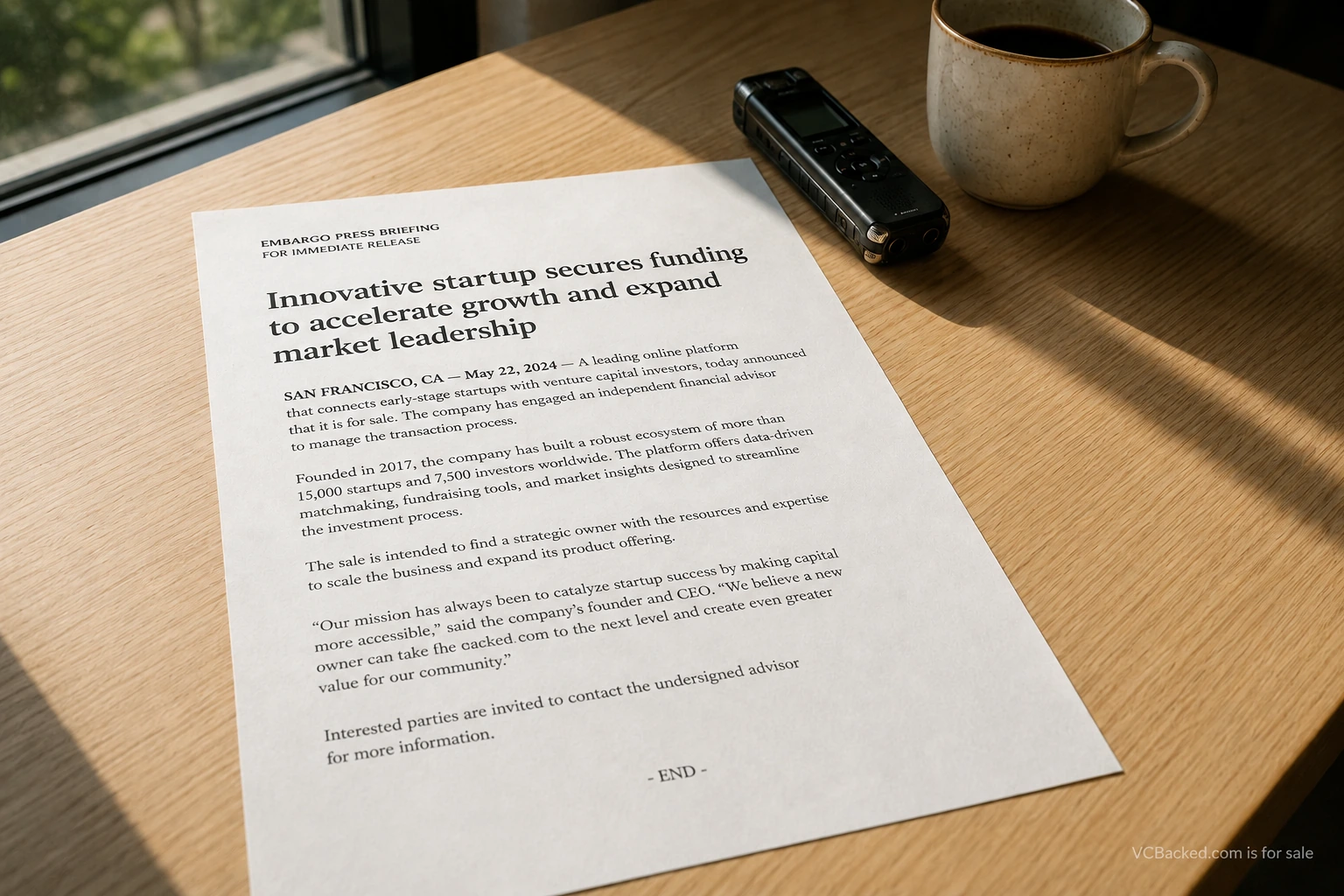
My years around press distribution taught me that a polished announcement and a verified story are different things. A release can point toward evidence, contacts, and timing, while the desk still has to test the claim and decide why it matters now. I would use that distinction openly. I would also revisit published claims after a quarter and tell readers when the evidence changed, because accountability should continue after the launch-day attention disappears. I would keep those follow-ups concise, dated, and connected to the original reporting so a reader can trace the record without guesswork. The site could explain its correction policy, sourcing practice, and treatment of embargoes in plain language. Those small institutional choices tell experienced readers whether the publication respects their attention.
Create a useful daily shape
A concise daily briefing could cover three items: one reported development, one document worth reading, and one company signal to watch. Longer pieces would follow only when reporting supports them. Crunchbase News offers a public example of company and funding coverage grounded in a large business dataset. The VCBacked.com desk could remain more selective and voice-led. Its advantage would come from the questions it repeatedly asks, not from trying to match the volume of an established newsroom.
Publish the standard, then prove it
I would launch with a beat statement, an ethics page, a corrections process, and five pieces that demonstrate the range of coverage. The homepage would show recent reporting rather than a crowded category index. A tip route could ask for documents and permit confidential contact without promising coverage. Over time, the archive would reveal whether the desk follows companies through difficult turns as carefully as it covers strong ones. That consistency could make VCBacked.com a credible media name for the industry it names.
A business behind the desk
The publication also needs an economic model readers can see and editors can defend. Membership, events, research, and carefully separated sponsorship are possible, with boundaries published before revenue pressure tests them. I would keep commercial staff away from story decisions and disclose relevant relationships beside coverage. A smaller desk can survive by serving a valuable audience deeply rather than chasing the largest possible traffic number. The business succeeds when readers pay for judgment and access to useful work, while subjects understand that payment never purchases a favorable story.