A desk, not a job board
I would build the talent idea as a placement desk for venture-backed companies with specific, funded hiring plans. The distinction matters. A broad board collects openings and applications. A desk learns the company, defines the role, evaluates a small candidate field, and remains involved through the decision. VCBacked.com can communicate the employer category in one glance. The service then has to prove that it understands stage, risk, cash and equity tradeoffs, and the difference between a famous company and a role that is genuinely well designed.
Begin with one role family
The first version should specialize. Senior go-to-market hires, finance leaders, or technical recruiting for early teams could each support a clear practice. I would pick the family where the desk has the best judgment and strongest candidate relationships. Wellfound offers a wide market for startup roles, which shows how much general discovery already exists. VCBacked.com could occupy the considered middle: fewer assignments, deeper briefs, and direct accountability for fit. Specialization also improves calibration because completed searches inform the next one.
Write the real scorecard
Before sourcing begins, the hiring manager and desk should agree on what success looks like after six and twelve months. Responsibilities are not enough. The scorecard needs outcomes, decision authority, team conditions, reporting line, required experience, and areas where an unconventional candidate can still succeed. That document becomes the basis for outreach, interviews, and references. It prevents a search from drifting toward whichever résumé looks most familiar and gives candidates a more honest view of the work.
Connect to the company system
A focused desk does not need to replace applicant tracking software. It should work cleanly with it. Greenhouse is one example of the infrastructure companies use to manage candidates and interviews. The VCBacked.com service could own role definition, targeted outreach, assessment design, and candidate care while recording decisions in the employer’s chosen system. Clear ownership reduces duplicated messages and makes compliance easier. It also leaves the company with an accurate record after the search closes.
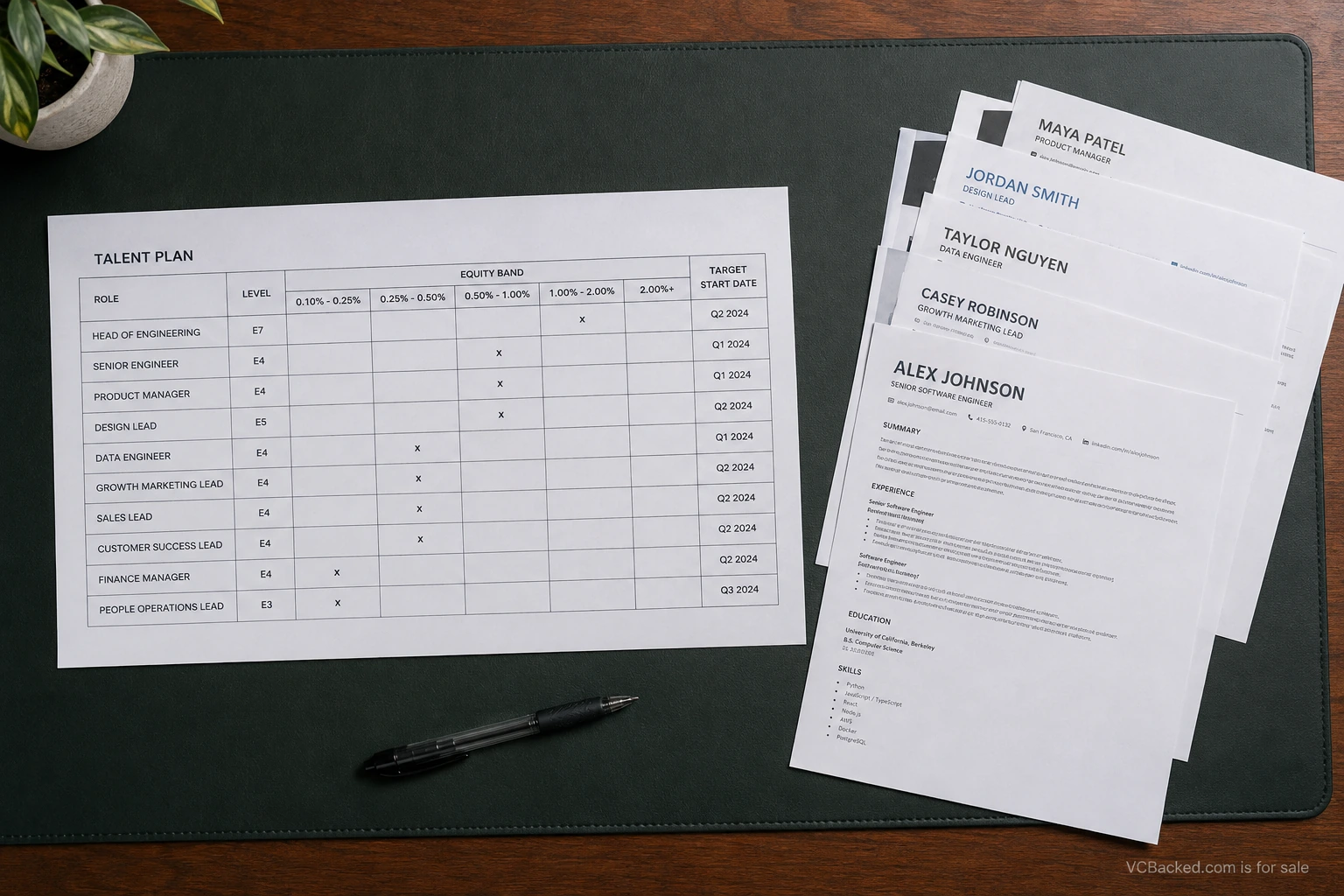
Treat candidate time as valuable
Every candidate should know the process, participants, expected timing, compensation range, and next step before committing to a long sequence. I would cap the interview stages and require the company to explain any additional work. Feedback should move quickly, even when the answer is final. Lever shows another established recruiting platform used by growing teams. A specialized desk can distinguish itself through human follow-through: prepared interviewers, useful updates, and a role brief that remains consistent from first call to offer.
Use evidence in evaluation
Structured interviews make comparisons fairer and decisions easier to defend. Each interviewer should own a small set of scorecard questions, record evidence independently, and submit the assessment before the group discussion. Work samples should resemble the actual role and stay proportionate to the stage. I would train hiring managers on this system as part of the engagement. I would review rejected candidates for patterns as well, since repeated disagreement can expose a vague scorecard or an interview question that rewards polish instead of relevant judgment. I would then revise the rubric before the next search and document why the standard changed for the team. The value is larger than one placement because the company leaves with a better hiring practice for future roles.
Make the funnel visible
The operating report should show the health of the search without exposing private candidate detail. I would track qualified outreach, replies, screened candidates, interviews, scorecard evidence, withdrawals, offers, and acceptance. Ashby reflects the increasing sophistication of recruiting operations at scaling companies. A VCBacked.com talent desk could translate that rigor for smaller funded teams. Weekly review would identify whether the role, market, compensation, or interview process is causing a stall, then assign a specific correction.
Earn a narrow reputation first
I would launch with two or three searches for companies whose leaders will do the preparation. The site could publish anonymized hiring notes, explain the desk standard, and invite candidates to join by role family rather than uploading a résumé to a general pool. Completed placements and candidate experience would determine the next stage. If the desk becomes known for clear briefs and respectful process, VCBacked.com can grow into a trusted hiring address without becoming the open web it was designed to avoid.
Stay accountable after acceptance
The desk should remain present through resignation, counteroffer, start date, and the first months in role. I would schedule brief check-ins with the candidate and hiring manager against the original scorecard. Early concerns can then be addressed while expectations are still clear. Placement guarantees and replacement terms should be written plainly before the search begins. This follow-through gives the service a view of performance beyond acceptance and improves future briefs. A successful search is a person doing valuable work in a company that understands why that person was hired.